Seat times
Form VL-T- Open
- Six days a weekDaytime hours, typically 09:00 to 17:00
- Seats
- 24 at a timeOne learning station each
- Seat-hours
- 1,152 a week24 seats × 8 hours × 6 days
- Children
- About 150Enrolled, sharing the seats across the week
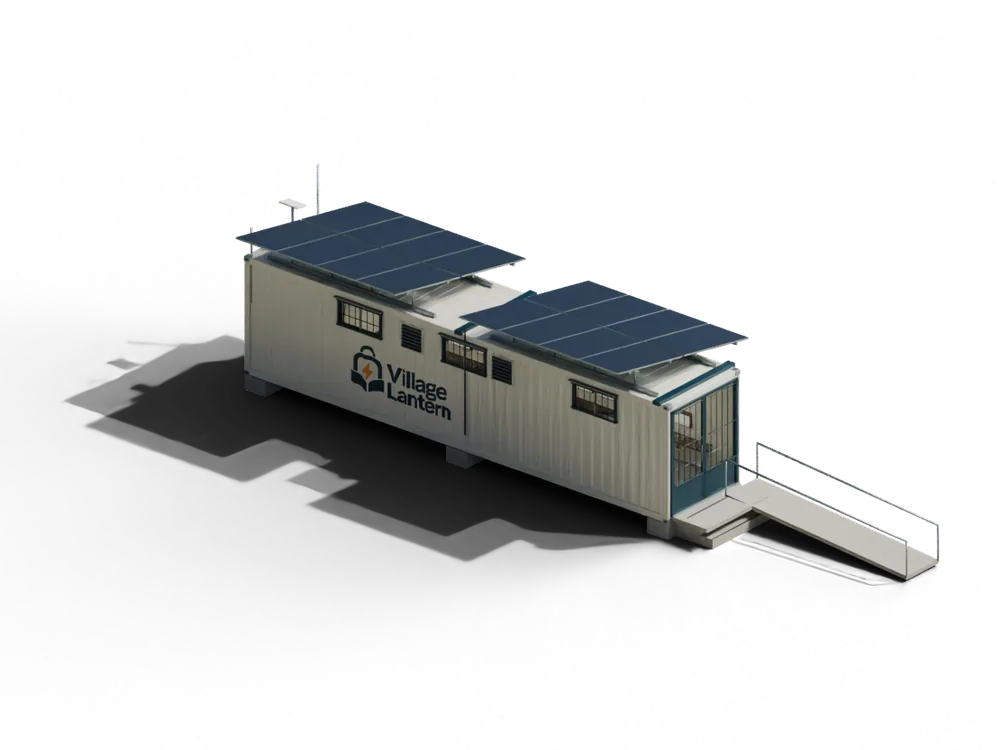
One Lantern teaches 24 children at a time, and about 150 share its seats across the week. Some villages need more. When the seats are full and children are waiting nearby, a Lantern can grow into a campus, piece by piece.
Planned. No Lantern has grown yet, so every new piece on this page is planned and none is built.
 24 seatsfrom$180k
Scroll, and a village that needs more places to learn grows around its first Lantern. Each piece prints onto the sheet as it arrives.
A Lantern grows in five kinds of piece. Turn a stamp over for what is inside, when it is added, and what it costs to build and to keep lit.
Planning estimates, October 2026, for a Lantern in Nigeria, Ghana, Kenya or Rwanda. A piece is built only where a Lantern’s data shows the need.
Design visualization of each piece, not photographs
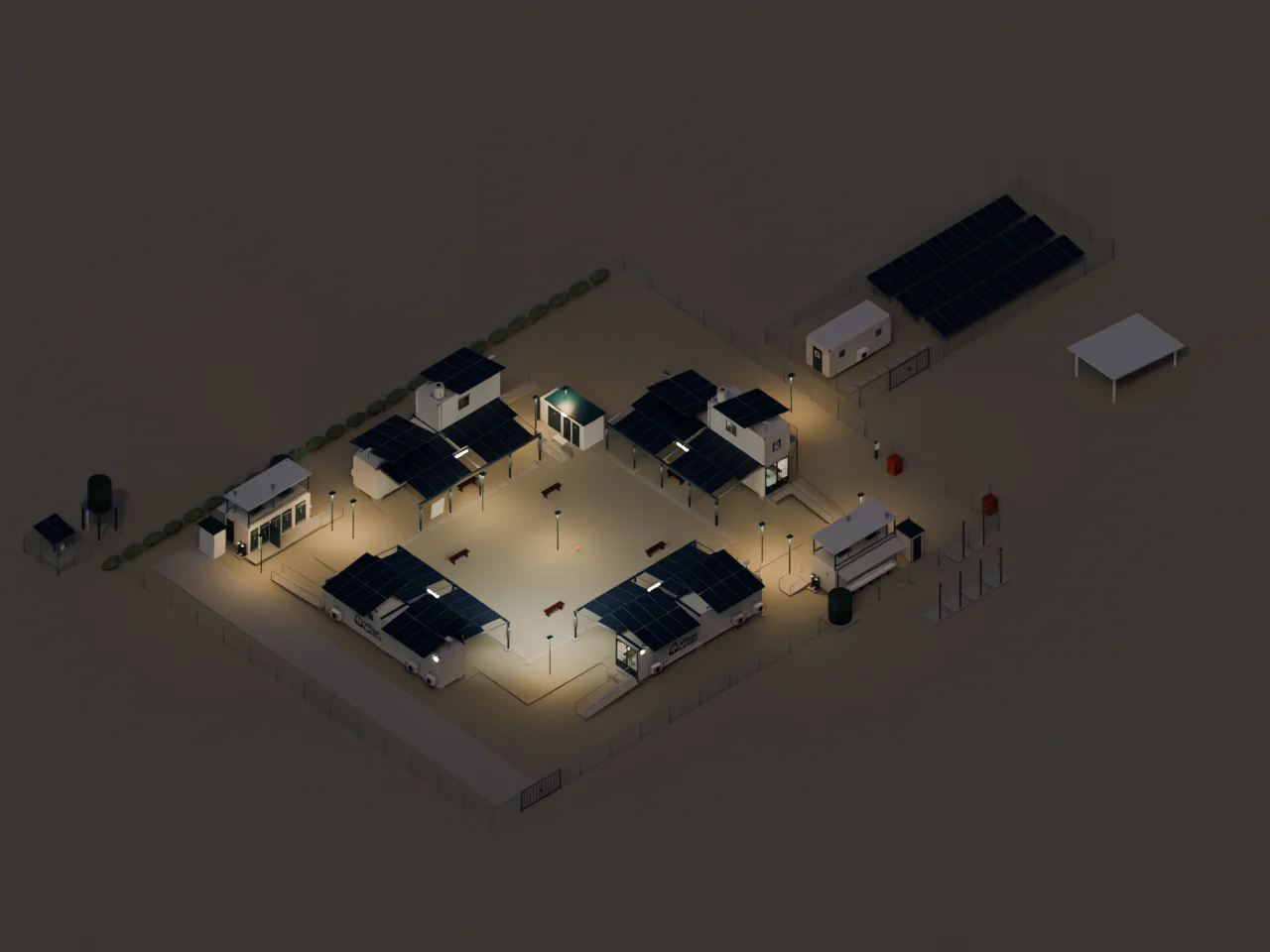
Here is one way a fully grown campus could look. Choose a number to light up that part of it.

Four classrooms, about 600 children.
Example costs for a campus in Edo State, Nigeria, planning estimates, October 2026.
Each classroom is complete on its own. Buildings are joined the way stamps are: close, connected, and still able to stand alone.
Every building keeps its own roof, inverter and battery. A cable lets a building with sun to spare carry a neighbour. Batteries are never shared.
Buildings talk over fibre, and each classroom’s dish backs up the next, so lessons and sync carry on if one link drops.
If one classroom’s power or computers fail, the others carry on. A classroom could even be moved to the next village.
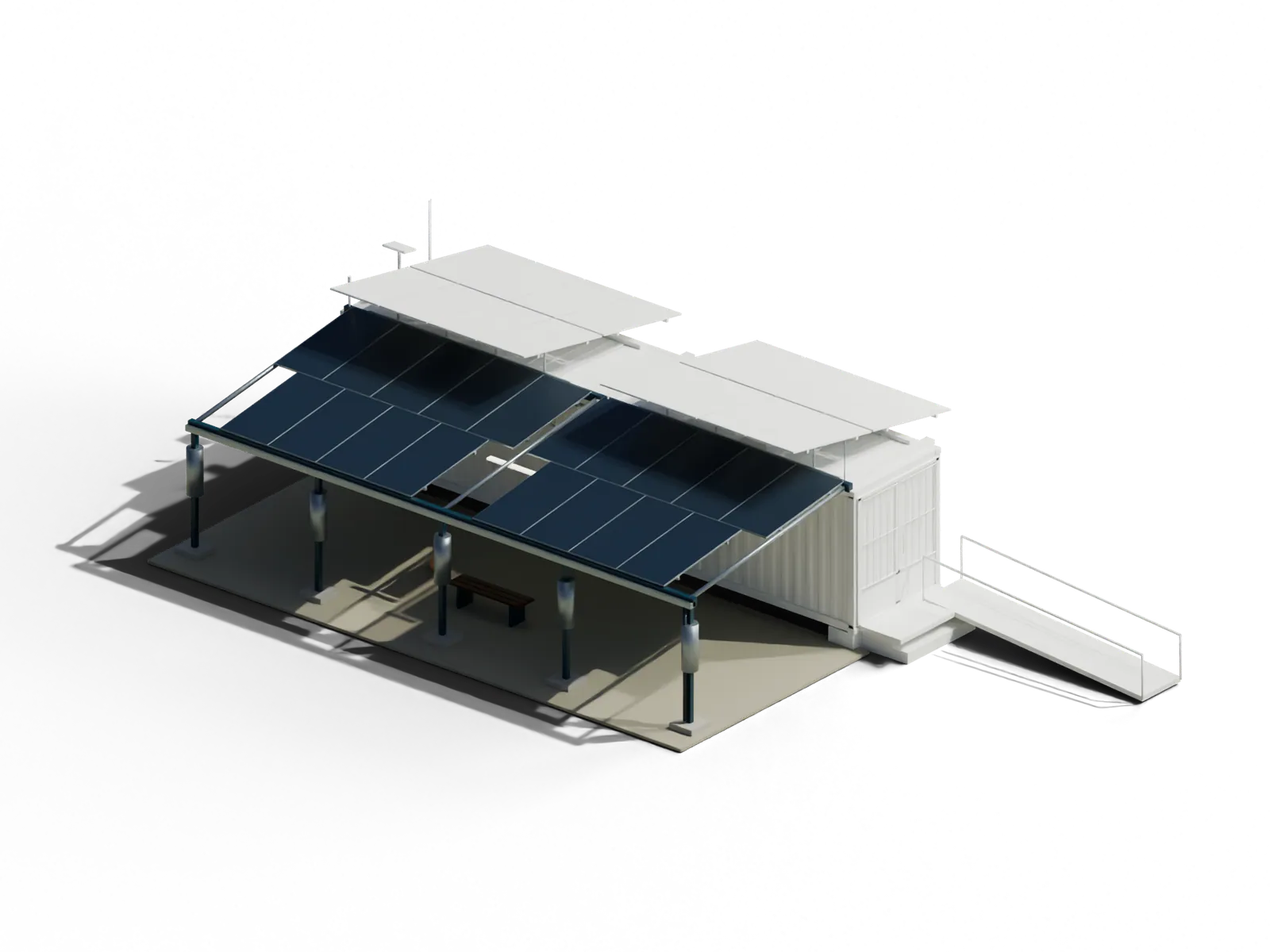
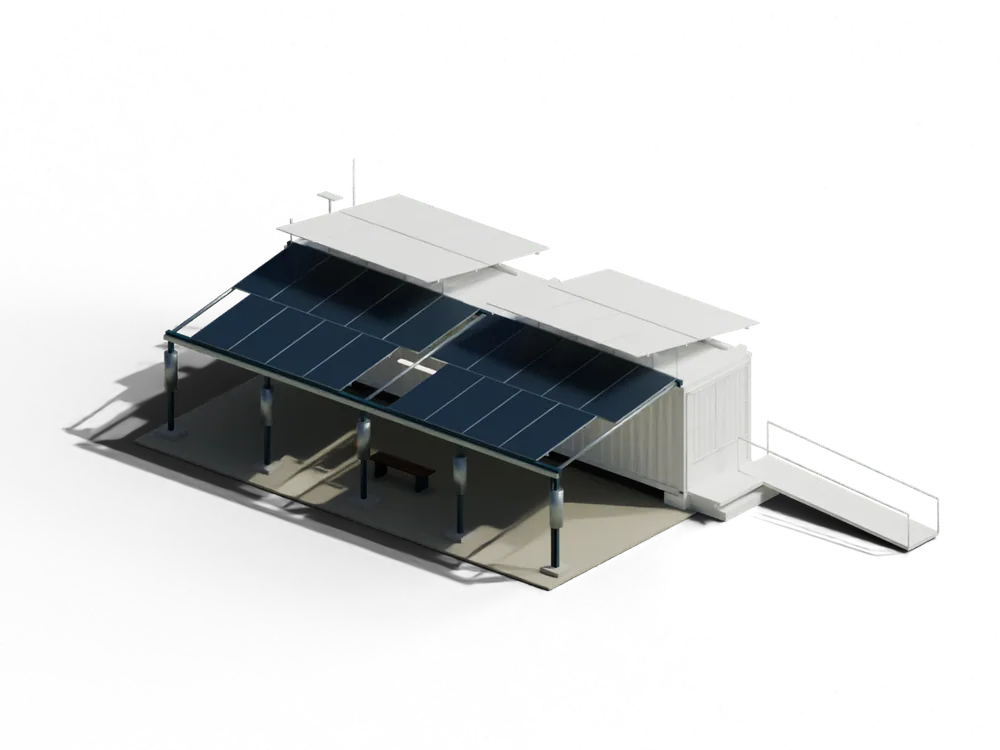
More solar than a roof can hold. It charges the Lantern’s batteries and keeps the lights and computers running into the evening. Underneath is shade for play and for village evenings, and its gutter fills the rain tank. Whatever power the Lantern doesn’t use goes on to the public building next door.
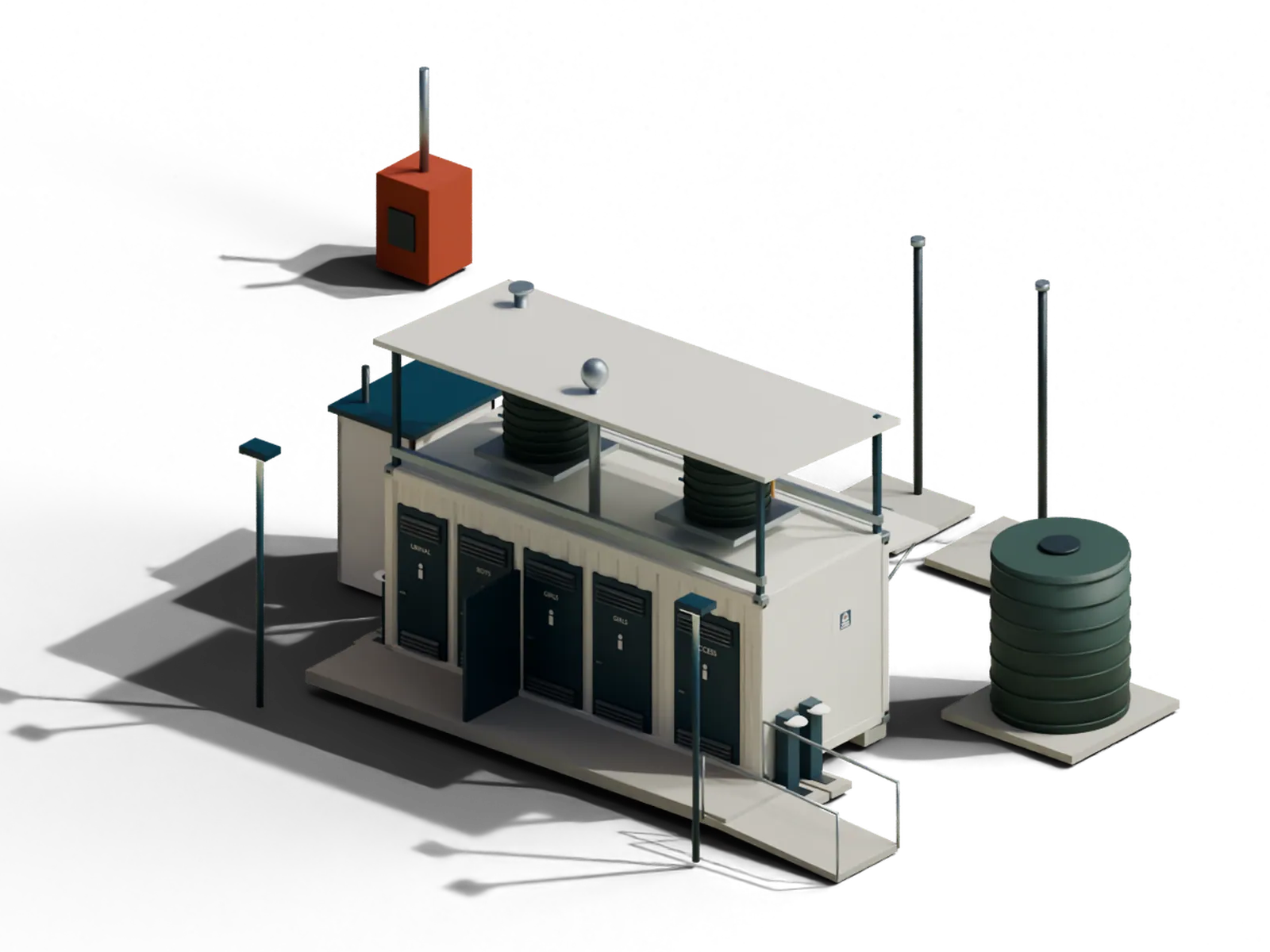
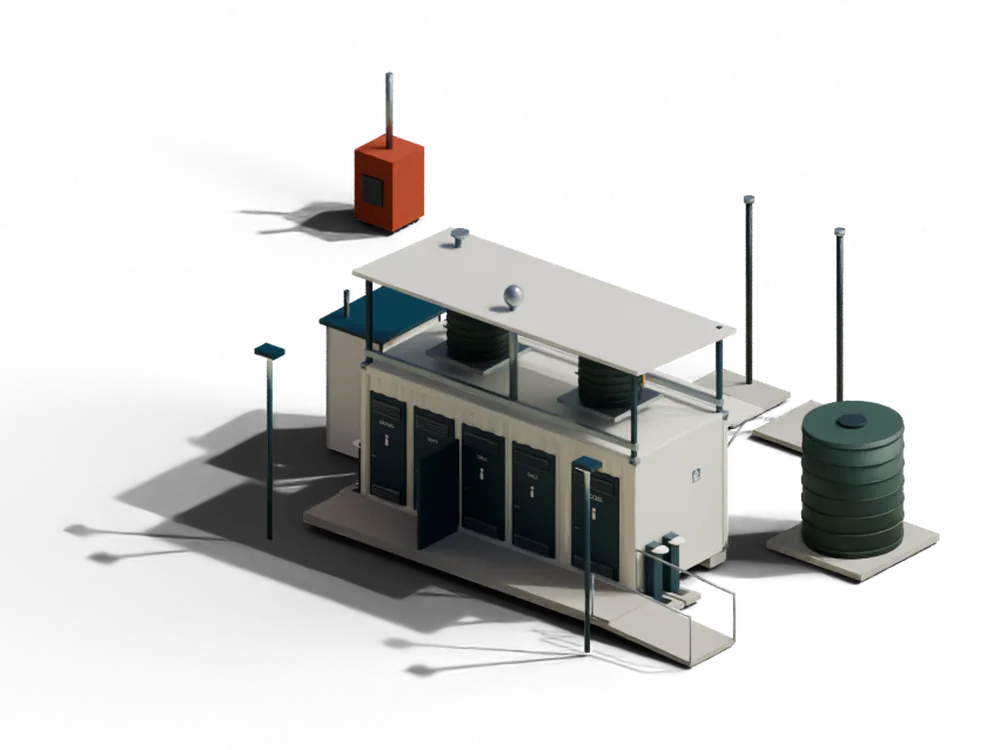
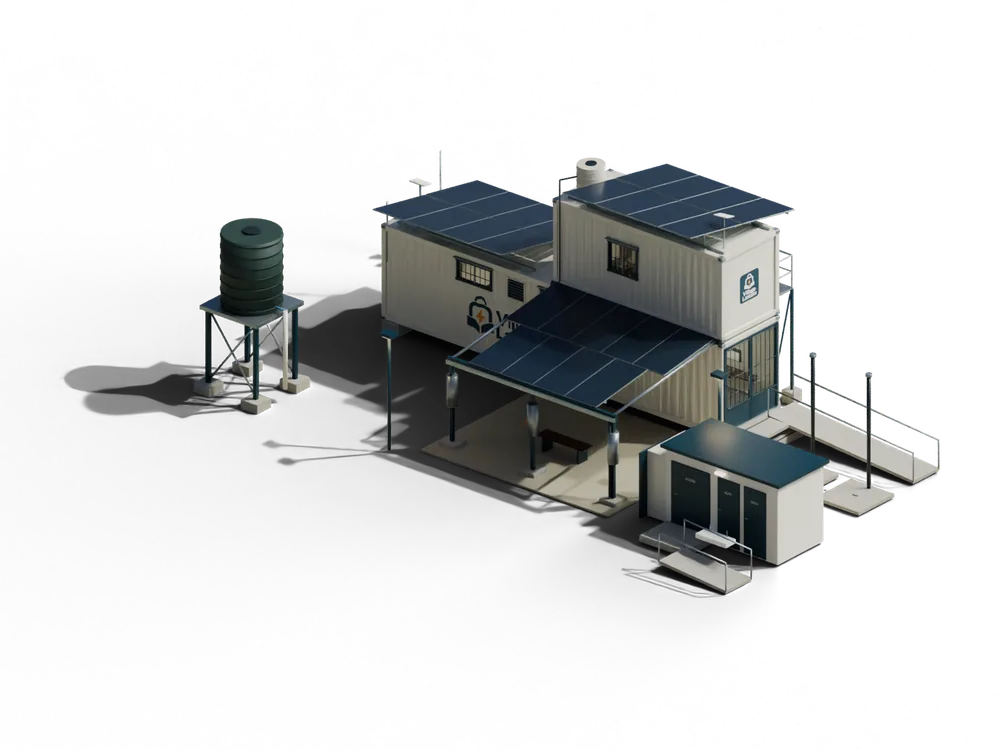
Four toilets with doors that lock, girls’ privacy, one accessible toilet and a urinal, drinking water that is filtered, treated and tested, and handwashing on the way out. Its air is pulled out above the roof so it stays fresh, and a paid cleaner keeps it that way. Adults have their own toilet beside it.
See its stamp: Wash HouseTalk to us about funding it: Wash House
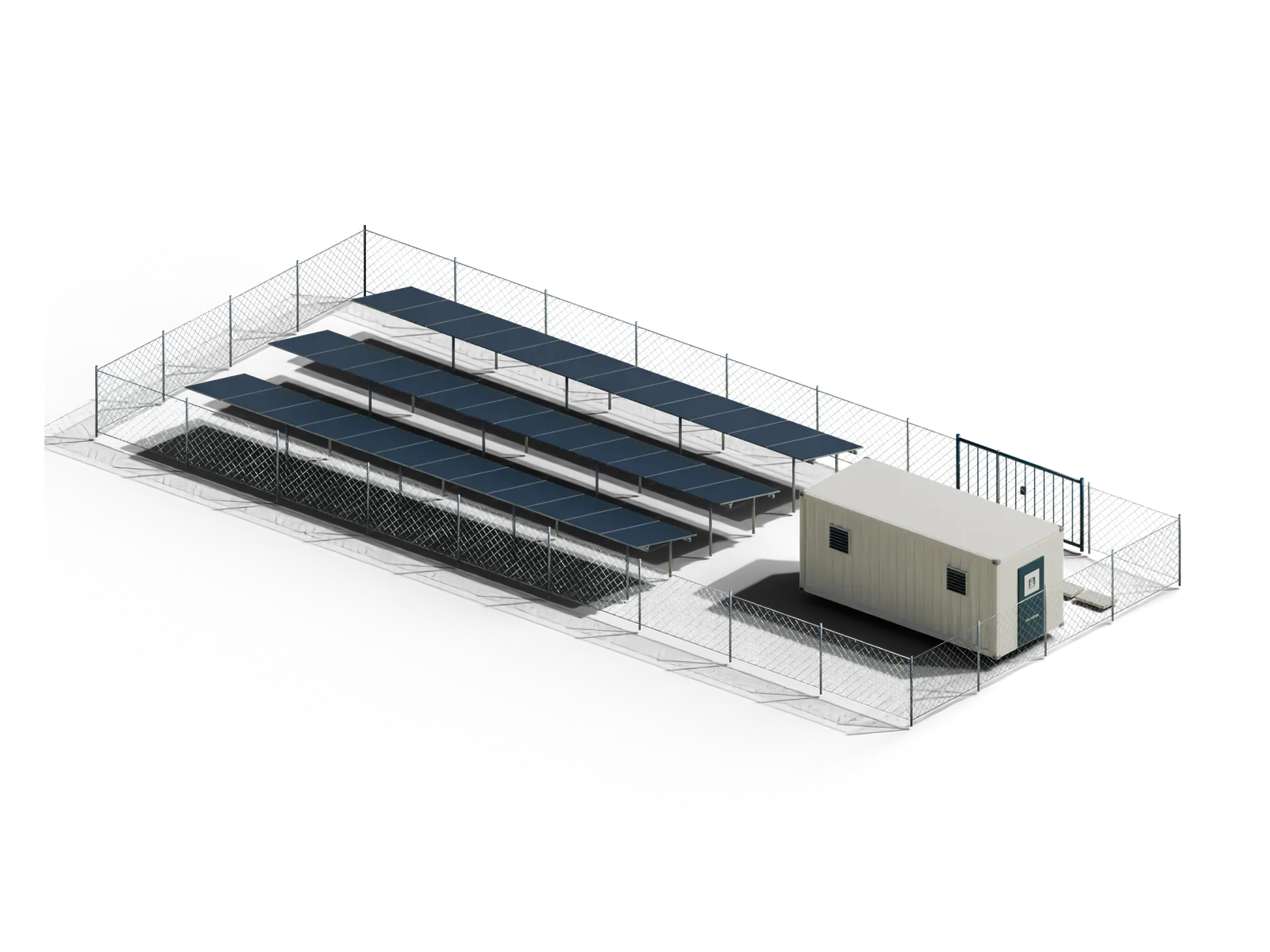
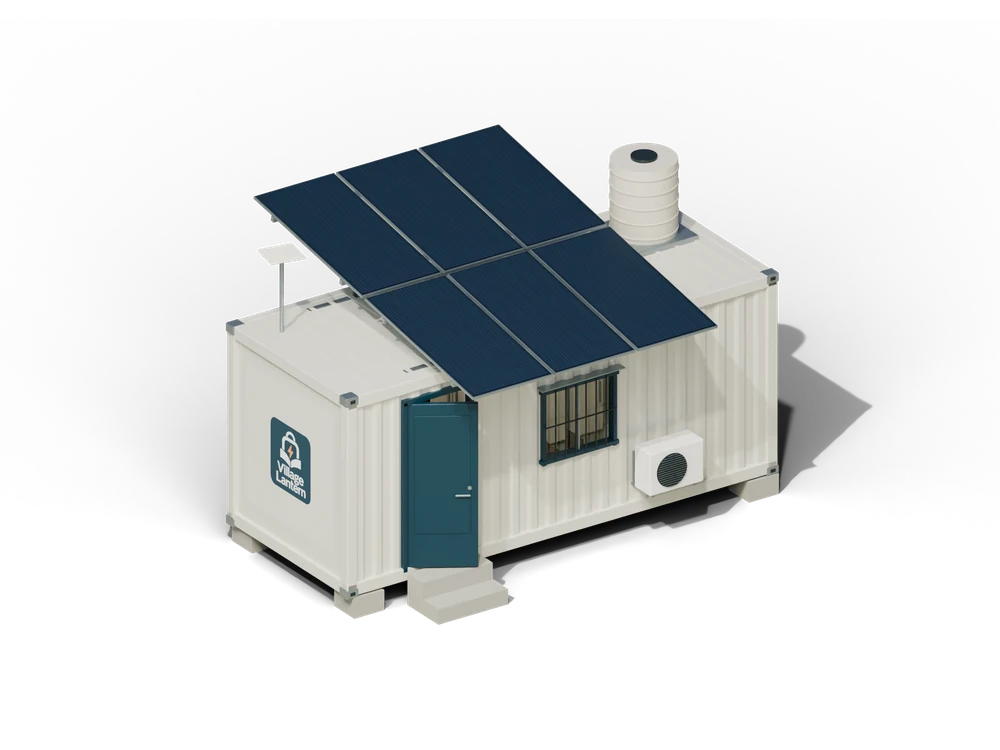
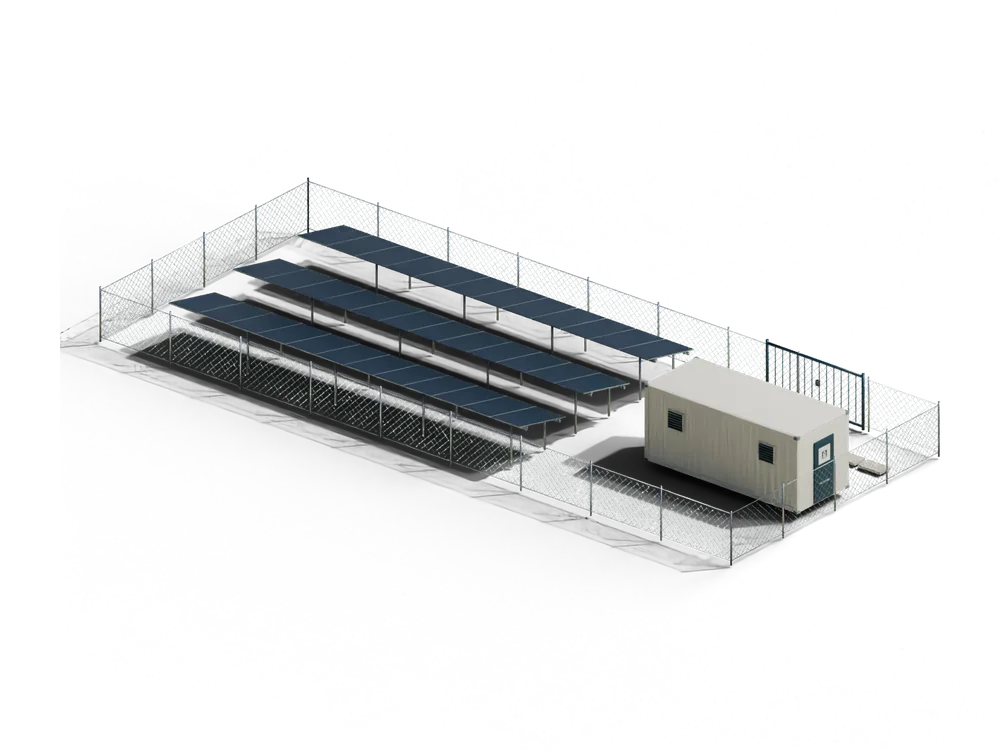
For a full campus only: a battery house and a fenced field of panels that carry the nights, the pumps and the Wash Houses. It charges the campus first. Only what the campus doesn’t use goes to the public building, and it is built only where a load study shows the need.
See its stamp: Power StationTalk to us about funding it: Power Station
Help light the next one. Or, if your village needs more than one classroom from the start, talk to us about a founding campus.
